
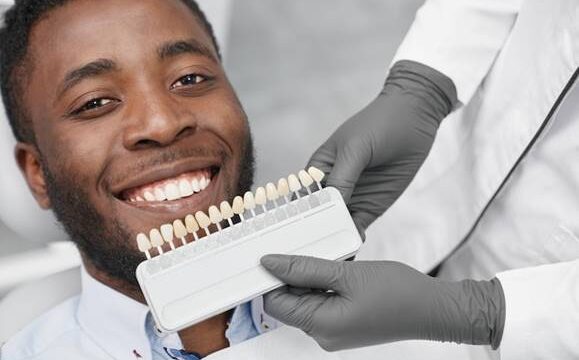
If you’re self-conscious about crooked teeth or gaps in your smile, you may be wondering whether you need braces—or if there’s a faster, more cosmetic solution. One increasingly popular option is dental veneers. But can veneers actually fix crooked teeth or close gaps?
The short answer is: Yes, veneers can correct the appearance of crooked teeth and gaps, depending on the severity of the issue. In this article, we’ll explore how veneers work, when they’re a good option for alignment concerns, and what to consider before choosing them.
What Are Veneers?
Veneers are ultra-thin, custom-made shells of porcelain or composite resin that are bonded to the front surfaces of your teeth. They are primarily used for cosmetic purposes, offering an instant transformation in the shape, size, color, and alignment of teeth.
Can Veneers Fix Crooked Teeth?
✅ Yes—For Mild to Moderate Misalignment
Veneers can create the appearance of straighter teeth by:
- Masking minor rotations or overlaps
- Creating symmetry where teeth appear uneven
- Covering chipped or worn edges that affect alignment
Best candidates:
Patients with slightly crooked teeth but no major bite issues or jaw misalignment.
❌ No—For Severe Orthodontic Problems
If your teeth are significantly rotated, severely crowded, or your bite is misaligned (e.g., overbite, crossbite), veneers may not be the right solution. In these cases, your dentist may recommend orthodontic treatment like braces or Invisalign first.
Can Veneers Close Gaps Between Teeth?
✅ Yes—In Most Cases
Veneers are very effective for closing small to moderate gaps (diastemas) between teeth by:
- Widening the surface of adjacent teeth
- Reshaping the edges for a seamless look
- Improving the proportions and spacing across the smile
Example: If you have a small gap between your front teeth, veneers can be designed to slightly enlarge each tooth and close the space without affecting your natural teeth’s position.
Benefits of Using Veneers to Fix Crooked Teeth or Gaps
- Fast results: Typically completed in 2–3 visits
- No braces or aligners required
- Whiter, more symmetrical smile
- Customizable shape and shade
- Stain-resistant and long-lasting (10–15 years)
Important Considerations Before Choosing Veneers
- Irreversible Procedure
Placing veneers involves removing a small amount of enamel, meaning the process is permanent.
- Oral Health Must Be Stable
You’ll need healthy gums and no untreated cavities or periodontal disease before veneer placement.
- Not a Functional Fix
Veneers only change appearance, not function. They won’t move the teeth or correct bite issues.
- Maintenance Matters
Although durable, veneers can chip or wear over time and may need replacement after 10–15 years.
Veneers vs. Braces or Invisalign
| Feature | Veneers | Braces/Invisalign |
| Treatment time | 2–3 weeks | 6–24 months |
| Corrects function | ❌ Cosmetic only | ✅ Bite and alignment |
| Appearance change | ✅ Immediate | ✅ Gradual |
| Reversible? | ❌ No | ✅ Yes (especially Invisalign) |
Bottom line: If your goal is cosmetic improvement, and your teeth are only mildly misaligned or spaced, veneers can be a perfect solution. For more complex issues, orthodontics is the better long-term approach.
Conclusion: Are Veneers Right for Your Smile?
Yes, veneers can fix crooked teeth and gaps—when used appropriately. They’re ideal for patients looking for fast, aesthetic enhancements without orthodontics. However, a thorough evaluation is essential to determine if veneers or another treatment is best for your case.